Soy: Great For Bone Health & Much More!
Soy: Great For Bone Health & Much More!
Our skeleton holds us upright, protects organs, and enables movement. As we age, maintaining strong and healthy bones becomes increasingly difficult. Peak bone density is achieved by the early 20s and then slowly declines over time. For women, the process dramatically increases after menopause due to a drop in estrogen. By age 70, men are almost equally vulnerable to weakened bones. Hip fractures top the list of concerns for older adults. Most people know of a senior relative or friend who did not survive hip surgery rehabilitation or was left with limited mobility and diminished quality of life. They may no longer be able to live safely on their own.
Most people with osteopenia or osteoporosis know that calcium and vitamin D play an important role in maintaining bone health. Fewer people know that emerging research suggests soy and its active compound, genistein, may also play a significant role in supporting bone health. While genistein is available as a supplement, it may make more sense to simply incorporate soy into the diet.
The Soy Controversy
Before we get into the benefits of genistein and soy for bone health, we must address the controversy over soy. Soy is considered a phytoestrogen. For this reason, women at risk of estrogen-sensitive conditions such as breast cancer have been told in the past to avoid it. In reality, current research suggests that phytoestrogens do not raise estrogen levels in the body (Viscardi et al., 2024). Because they have a structure similar to estrogen, they can bind to estrogen receptors, which may help modulate estrogen and how it functions in the body.
While this oversimplifies a complex subject, the body has at least two types of estrogen receptors: ER-alpha and ER-beta. The alpha receptors are proliferative, meaning if estrogen or an estrogen-like substance binds to them, it will encourage growth – including certain cancers under the right conditions. Beta receptors are antiproliferative, meaning that if estrogen or an estrogen-like substance binds to them, it inhibits growth, including precancerous growth.
One category of phytoestrogens includes isoflavones, such as the genistein found in soy products. Lignans comprise another category, including flax, lentils, and beans. Phytoestrogens also come from a wide variety of healthy plants that most people tolerate well, including flax, lentils, beans, and quercetin (found in apples and onions).
In Asian countries, osteoporosis is far less common than in the West. This may be because Asians consume between 25-50 mg of isoflavones, while Americans consume less than 3 mg (Spagnuolo et al., 2015). Isoflavones such as genistein, which are believed to bind weakly to ER-beta receptors. They also seem to improve bone, blood vessel, and nervous system health.
And let’s not forget that depending on how it was processed, a 3.5-ounce serving of firm tofu averages around 500 mg of bone-supportive calcium– more than a glass of milk (Science Insights, 2026).
The Role of Soy and Genistein in Bone Health
The potential health benefits of genistein on bone health have been well studied.
1. Bone Density and Strength:
Genistein has been shown to stimulate bone formation (osteoblasts) and inhibit bone breakdown (osteoclasts), improving bone density and strength. It also helps maintain healthy cartilage, offering protection against bone and cartilage diseases such as osteoporosis and osteoarthritis (Wu & Liu 2022).
2. Anti-inflammatory Properties:
Chronic inflammation contributes to bone loss and osteoporosis. Genistein has anti-inflammatory properties that may help reduce inflammation, thereby further protecting against bone loss (Wu & Liu 2022).
Genistein and Endometriosis
In mouse studies, genistein reduced vascular endothelial growth factor–A (VEGF-A), a marker that is elevated in the blood work of women with endometriosis. While rodent studies are less valuable than human studies, genistein warrants further study for this condition. Elevated VEGF-A is believed to contribute to the painful proliferation of endometrial tissue in the uterine area. Genistein also reduced ER–alpha expression, the estrogen receptor that encourages tissue growth (Sutrisno & Maharani 2024).
Genistein and Cancer (Especially Breast and Prostate)
A recent meta-analysis of studies looking at the risk of breast cancer and consumption of soy found an inverse relationship. Consuming at least 15 mg of soy daily resulted in a significantly decreased risk of breast cancer. In women already diagnosed with breast cancer, soy was associated with a reduced risk of death (Boutas et al., 2022).
In the discussion, the authors noted the soy controversy and acknowledged that not all studies demonstrated a clear benefit of eating soy products to reduce breast cancer risk. However, it should be noted that mainstream cancer organizations such as Memorial Sloan Kettering Cancer Center describe soy as helpful for cancer prevention, although they also note that in some cases of active cancer, doctors may have concerns about soy interacting with medications (2026).
Genistein For Osteoarthritis and Rheumatoid Arthritis
Genistein is thought to decrease pain pathways (COX2) associated with osteoarthritic pain. It may also reduce cartilage degeneration by inhibiting collagen breakdown, a critical part of cartilage. (By the way, supplemental collagen has not been found to rebuild already damaged cartilage). Genistein is also being studied for its ability to inhibit the progression of rheumatoid arthritis, another painful and degenerative condition (Wu & Liu 2022).
Soy for Cholesterol and Weight Management
The health benefits of eating soy are extensive and include its ability to modestly lower cholesterol, especially LDL or so-called bad cholesterol (Jenkins et al., 2010). It may also help with weight management. A half-cup serving of tofu contains 22 grams of low-calorie complete protein.
Incorporating Soy and Genistein into Your Diet
Adding soy and genistein to your diet can be a delicious, nutritious way to support overall health. Here are some easy ways to incorporate soy into your meals:
Tofu: Add tofu to stir-fries, salads, or soups for extra protein.
Soy Milk: Use soy milk as a dairy alternative in your morning cereal or smoothie.
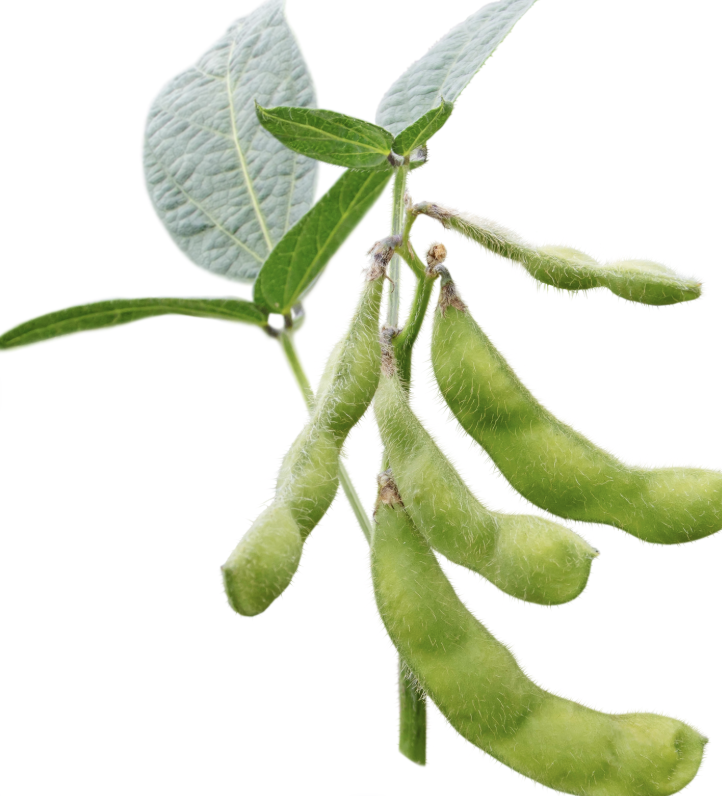
Edamame: Enjoy edamame as a snack or add it to salads and stir-fries.
Note: Avoid GMO soy products because they may have high glyphosate (pesticide) residue. Look for the organic label when possible.
Conclusion
While more research is needed to fully understand the role of soy and genistein in bone health, the existing evidence suggests that incorporating soy into your diet may offer significant benefits for bone health. By including soy-based foods in your meals, you can take a proactive approach to supporting your bones and overall health.
Disclaimer
The included information is not meant to or should not be used to replace or substitute medical treatment, recommendations, or the advice of your physician or health care provider. The information contained within is strictly for educational purposes and is based on evidence-based nutrition. If you believe you have a medical problem or condition, please contact your physician or healthcare provider.
References:
Boutas, I., Kontogeorgi, A., Dimitrakakis, C., & Kalantaridou, S. N. (2022). Soy Isoflavones and Breast Cancer Risk: A Meta-analysis. In vivo (Athens, Greece), 36(2), 556–562. https://doi.org/10.21873/invivo.12737
Jenkins D, Mirrahimi A & Srichaikul K et al. (2010)
Soy Protein Reduces Serum Cholesterol by Both Intrinsic and Food Displacement Mechanisms1–3
The Journal of Nutrition, 140, 2302S-2311S
Memorial Sloan Kettering Cancer Center (2026). Soy: Purported Benefits. https://www.mskcc.org/cancer-care/integrative-medicine/herbs/soy
Science Insights (2026) https://scienceinsights.org/how-much-calcium-is-in-tofu-by-type-and-absorption/
Spagnuolo, C., Russo, G. L., Orhan, I. E., Habtemariam, S., Daglia, M., Sureda, A., Nabavi, S. F., Devi, K. P., Loizzo, M. R., Tundis, R., & Nabavi, S. M. (2015). Genistein and cancer: current status, challenges, and future directions. Advances in nutrition (Bethesda, Md.), 6(4), 408–419. https://doi.org/10.3945/an.114.008052
Sutrisno, S., & Maharani, M. (2024). Genistein Ameliorated Vascular Endothelial Growth Factor-A (VEGF-A) and Estrogen Receptor-Alpha (ER-α) in Endometriosis Mice Model, In Vivo and In Silico. TheScientificWorldJournal, 2024, 5338212. https://doi.org/10.1155/2024/5338212
Viscardi G, Back S, Ahmed A, et al. (2024) Effect of Soy Isoflavones on Measures of Estrogenicity: A Systematic Review and Meta-Analysis of Randomized Controlled Trials. Advanced Nutrition: 16(1):100327. doi:10.1016/j.advnut.2024.100327
Wu, Z., & Liu, L. (2022). The protective activity of genistein against bone and cartilage diseases. Frontiers in pharmacology, 13, 1016981. https://doi.org/10.3389/fphar.2022.1016981